What Clinicians Need Most Right Now: Time Back for Patients
The day starts early. A nurse rolls a workstation into a patient room, juggling charting with comforting words. Before long, she’s moving quickly between spaces—adjusting equipment, documenting care, collaborating with colleagues. By midday, she’s on her feet for hours, relying on tools that either make the day flow—or slow her down.
For clinicians, every minute matters. Yet too often, the balance tips toward technology and administrative tasks, leaving less time for the heart of healthcare: patients.
The Core Needs of Clinicians Today
- Seamless Workflows
Tools should support care, not interrupt it. Technology and equipment work best when they blend naturally into a clinician’s rhythm. - Mobility and Flexibility
Patient care isn’t static, and the tools clinicians rely on shouldn’t be either. Solutions must move with them, wherever care happens. - Reduced Administrative Burden
When charting, searching, or troubleshooting takes less time, clinicians can spend more time where they’re needed most—at the bedside. - Trusted Support
Clinicians thrive when their environment and tools are reliable, designed to anticipate needs and ease the pressure of long shifts.
Support That Moves with Clinicians
Every clinician’s day looks different. Some are charting between visits, others are managing patient flow, and many are balancing endless demands. That’s why supportive solutions—whether mobile workstations, wall-mounted systems, or ergonomic designs—must flex with them.
Clinicians often share a common truth: the best tools are the ones that move with them, not against them. When solutions are designed thoughtfully, they fade into the background—freeing clinicians to focus on what matters most: their patients.
Did you know?
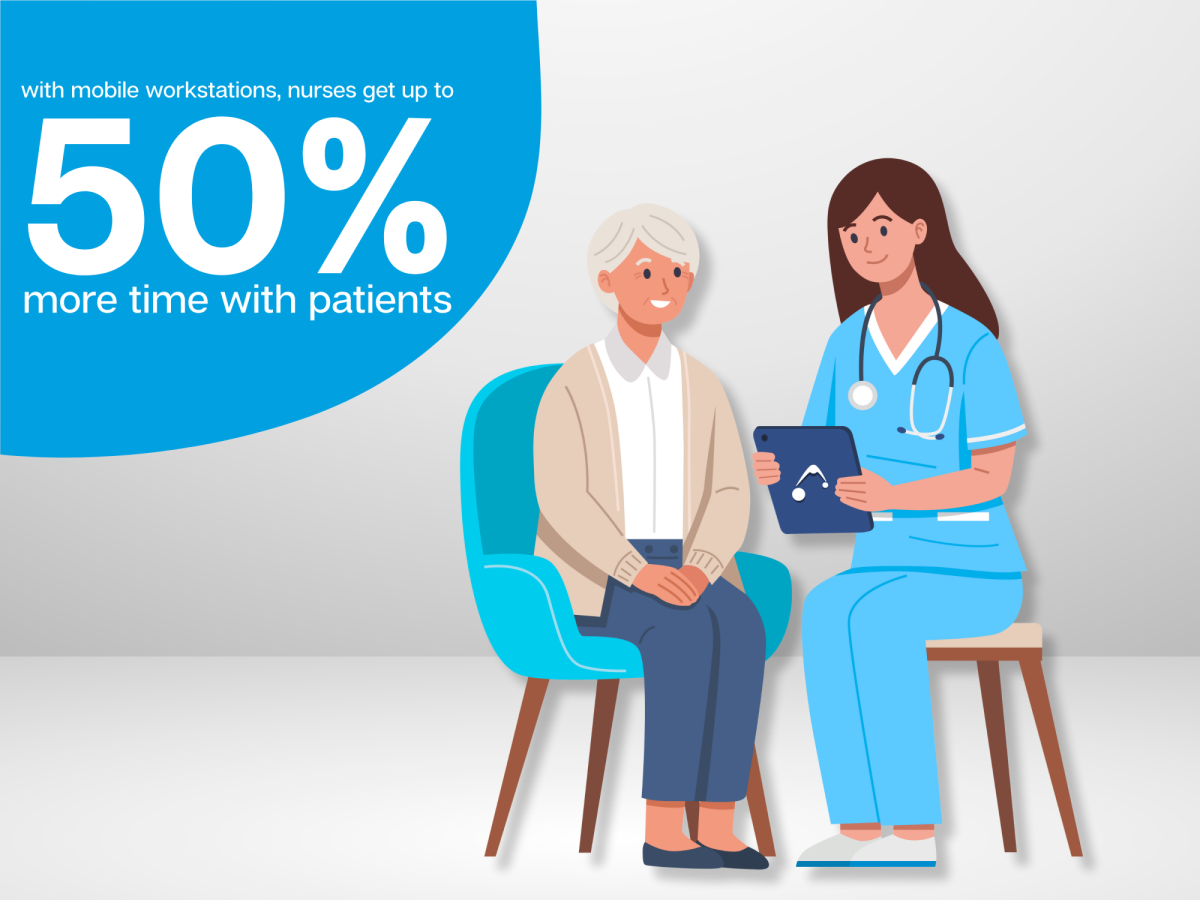
When nurses can document care at the point of care using mobile carts, they eliminate extra steps—potentially freeing up 25% to 50% more time at the bedside.¹ That’s time returned directly to patients.
Putting Patients First, Together
Clinicians give their all every day. The right support helps them give even more to patients—not by working harder, but by working with ease. Because when workflows feel seamless and tools stay out of the way, patient care can take center stage, where it belongs.